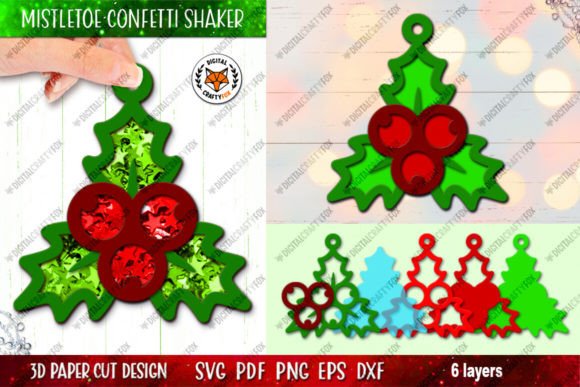
Evaluating the 3D Christmas Mistletoe Confetti Shaker for Paper Crafting
The holiday season presents a unique challenge for crafters and small business owners: creating items that feel both festive and mechanically interesting without requiring industrial manufacturing capabilities. The Christmas Mistletoe Confetti Shaker, 3D emerges as a compelling solution in this space. It is not merely a static decoration but an interactive paper engineering project that combines traditional cutting techniques with modern digital file versatility. For professionals in the crafting industry, educators, or serious hobbyists, understanding the structural integrity and design flexibility of this asset is crucial before integrating it into a workflow.
This analysis explores the practical applications, material requirements, and file specifications of the 3D layered mistletoe design. By examining its construction logic and user experience, we can determine whether this digital download serves as a viable resource for your specific creative or commercial needs.
Structural Design and Mechanical Functionality
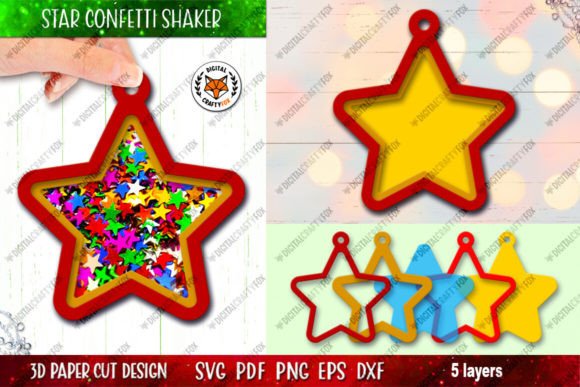
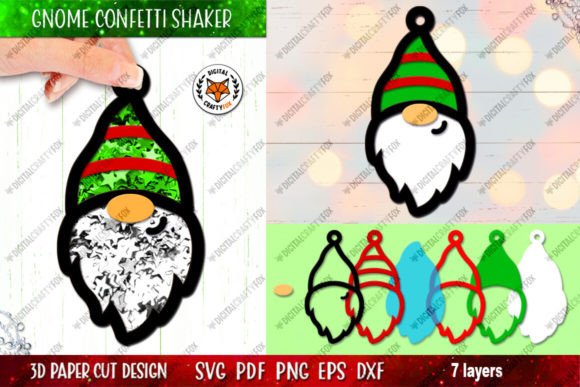
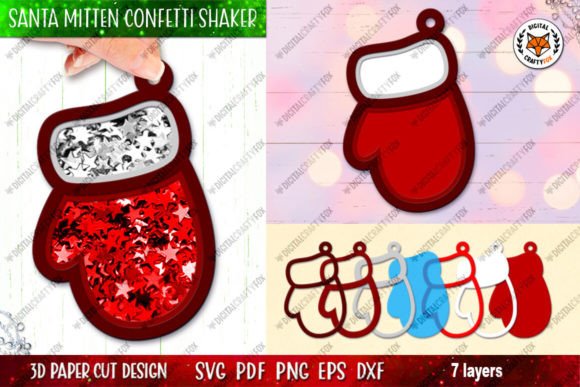
At its core, the Christmas Mistletoe Confetti Shaker, 3D relies on a multi-layered architecture. Unlike flat papercrafts, this design utilizes depth to create a contained environment for loose elements such as glitter, sequins, or confetti. The visual appeal lies in the transparency of the front layer, which allows the viewer to see the movement within, while the back layer provides structural support and aesthetic completion.
The effectiveness of any shaker toy depends heavily on the "rim" or spacer layer. In this design, the creator provides specialized strips with teeth, available in EPS10, PNG, SVG, and DXF formats. These strips are not decorative; they are functional components designed to create a high rim that holds the confetti securely. The inclusion of these specific files indicates a thoughtful approach to user error prevention. A common failure point in DIY shakers is insufficient depth, leading to jammed contents. By providing pre-designed spacer strips, the asset mitigates this risk, ensuring consistent performance across different builds.
The layers are numbered in the order of gluing, a detail that significantly enhances usability. For educators teaching paper engineering or beginners attempting their first 3D project, this sequential guidance reduces cognitive load and minimizes assembly errors. It transforms a potentially confusing process into a linear, manageable task.
Material Selection and Build Quality
The versatility of the Christmas Mistletoe Confetti Shaker, 3D is largely defined by the materials chosen during assembly. The design does not lock the user into a single medium, allowing for adaptation based on available resources and desired durability.
- Spacer Materials: For the layer that holds the confetti and gives it height, the design accommodates thick cardboard, felt, foam (foamin), or double-sided tape. Thick cardboard offers rigidity and is cost-effective for bulk production. Felt provides a softer, premium tactile experience and excellent light diffusion, though it may require more precise cutting to maintain clean edges. Foam sheets offer the greatest height for larger glitter particles, enhancing the visual volume of the shaker.
- Transparent Windows: The recommendation to use thin silicone material covers from notebooks or folders is a practical, budget-friendly insight. These materials are readily available, flexible, and resistant to cracking under stress. For a more professional finish, acetate sheets or clear PET plastic can be substituted, but the suggested notebook covers lower the barrier to entry for casual crafters.
- Base Structure: The main body benefits from cardstock between 250gsm and 300gsm. This weight provides enough stiffness to hold the shape without being so thick that it becomes difficult to fold or glue neatly.
A critical practical observation regarding size is necessary. While the files allow for scaling, making the toy too small is discouraged. A miniature shaker becomes inconvenient to fill with glitter, and the internal mechanics may fail if the tolerance between layers is too tight. Conversely, scaling up can create a striking display piece, provided the spacer height is adjusted proportionally to prevent the confetti from settling too densely at the bottom.
Digital Asset Flexibility and File Formats
For digital creators, cut-file entrepreneurs, and laser cutting professionals, the format of the source files is as important as the design itself. The zip archive associated with this product demonstrates a comprehensive approach to compatibility.
The inclusion of DXF files ensures compatibility with industrial plotters and older CAD software, catering to professional sign-makers and large-format printers. SVG files are essential for users of consumer-grade cutting machines like Cricut or Silhouette, allowing for easy editing and layer separation. The EPS10 files serve graphic designers who may wish to incorporate the vector shapes into broader marketing materials or packaging designs. Additionally, the provision of PNG files at 300 dpi on a transparent background is invaluable for digital mockups, allowing sellers to visualize the final product without physical prototyping.
The presence of a PDF file with all layers consolidated offers a quick reference for manual crafters who may not use cutting machines. Furthermore, the inclusion of files specifically marked for hand cutting acknowledges the segment of the audience that prefers traditional scissors and craft knives, broadening the product's market reach.
Alternative Applications and Customization
While the primary function is a confetti shaker, the 3D Christmas toy design possesses inherent modularity. Users who prefer a simpler project can omit the shaker mechanism entirely. By removing the transparent window and spacer layers, the remaining components form a robust, standalone 3D ornament. This flexibility increases the asset's value proposition, as it serves two distinct crafting purposes: an interactive toy and a static decorative piece.
Customization extends beyond structure. Because the files are vector-based, colors can be altered before cutting to match specific brand palettes or interior design schemes. This is particularly relevant for small business owners creating bespoke holiday gifts or corporate decorations. The ability to produce a cohesive look across multiple units is a significant advantage over pre-made, mass-produced decorations.
Target Audience and Practical Use Cases
Who benefits most from the Christmas Mistletoe Confetti Shaker, 3D? The utility spans several demographics:
- Educators and Workshop Leaders: The numbered layers and clear instruction logic make this an ideal project for teaching spatial reasoning and fine motor skills. It is suitable for older children under supervision or adult education classes focused on paper engineering.
- Etsy Sellers and Craft Entrepreneurs: The commercial viability of shaker cards and ornaments remains high. This digital download allows sellers to produce inventory on demand, reducing storage costs. The professional quality of the vector files ensures that the final product looks polished, supporting higher price points.
- Marketing Professionals and Bloggers: The visual nature of the shaker makes it excellent content for social media. The movement of the confetti captures attention in video formats, providing engaging material for holiday campaigns or blog tutorials.
- Serious Hobbyists: For individuals seeking a challenge beyond basic coloring books, the assembly of a 3D layered object provides a satisfying sense of accomplishment. The requirement to select appropriate materials adds a layer of decision-making that engages the crafter more deeply than simple assembly kits.
Limitations and Considerations
Despite its strengths, potential users should be aware of certain limitations. First, this is a digital download only; no physical materials are included. Users must possess their own cutting tools, adhesives, and filler materials. Second, the quality of the final product is directly proportional to the precision of the user's cutting and assembly. Poor glue application can lead to leaks, ruining the shaker effect. Therefore, patience and attention to detail are prerequisites for success.
Additionally, while the design is robust, it is still paper-based. It is not suitable for rough handling by very young children who might tear the transparent window or crush the structure. It is best positioned as a decorative item or a gentle interactive toy for older audiences.
Final Assessment
The Christmas Mistletoe Confetti Shaker, 3D represents a well-executed digital craft asset. Its strength lies in the balance between complexity and accessibility. The provision of multiple file formats, specialized spacer strips, and clear layer numbering demonstrates a high level of user-centric design. For those looking to add interactive, three-dimensional elements to their holiday crafting repertoire, this tool offers reliable performance and significant creative flexibility. Whether used for educational purposes, commercial production, or personal enjoyment, it stands as a practical and effective resource in the digital crafting landscape.