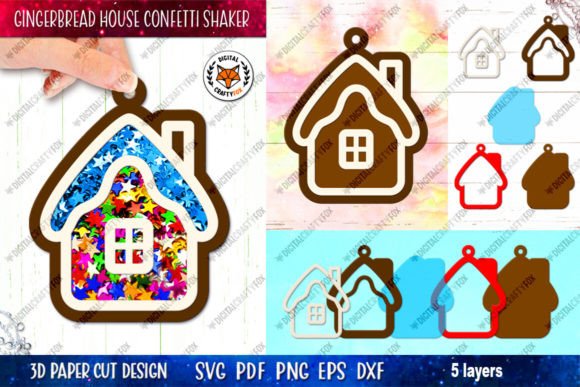
Crafting a Gingerbread House Confetti Shaker: A Guide to 3D Layered Design and Digital Files
The holiday season often inspires crafters to move beyond flat decorations and explore dimensional projects that capture the magic of winter. Among these, the Gingerbread House Confetti Shaker has emerged as a distinctive choice for paper artists and DIY enthusiasts. This project combines the nostalgic charm of a classic gingerbread cottage with the interactive delight of a shaker mechanism, creating a piece that is both visually striking and tactilely engaging. Unlike traditional cardstock ornaments, this design relies on a sophisticated 3D layered approach, requiring careful consideration of materials, assembly techniques, and digital file formats.
For adults aged 20 to 50 who are evaluating crafting resources, understanding the nuances of this specific project is essential. It is not merely about cutting shapes; it is about engineering a small, sealed environment that holds loose elements like glitter or confetti. This article explores the structural requirements, material alternatives, and file specifications associated with the Gingerbread House Confetti Shaker, helping you determine if this project aligns with your skills and creative goals.
Understanding the 3D Layered Structure
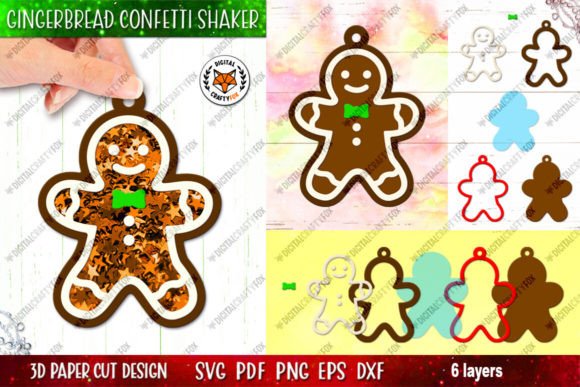
The core appeal of the Gingerbread House Confetti Shaker lies in its depth. A standard paper cutout is two-dimensional, but a shaker requires volume. The design utilizes multiple layers to create a cavity where confetti can move freely. This architectural approach distinguishes it from simpler papercraft toys. The layers are typically numbered in the order of gluing, providing a clear roadmap for assembly. This systematic layering is crucial because any misalignment can compromise the structural integrity of the shaker or cause the contents to leak.
To achieve the necessary height for the confetti chamber, crafters must choose appropriate spacer materials. The design allows for flexibility here. You can use thick cardboard, which provides rigid support and is readily available from recycled packaging. Alternatively, felt offers a softer, more forgiving edge that can help seal gaps, while foam board (often referred to as foamin) provides significant depth with minimal weight. Another practical option is the use of double-sided tape strips built up in layers. Each material presents tradeoffs: cardboard is stiff but may require precise cutting to avoid jagged edges, while foam is easy to cut but can compress if too much pressure is applied during assembly.
A unique feature of many modern digital designs for this toy is the inclusion of special strips with teeth. These are designed to create a high rim that effectively holds the confetti and glue strips in place. This detail is particularly useful for maintaining the separation between the transparent front and the decorative back, ensuring that the glitter remains contained within the intended zone. Without such structural aids, the shaker might appear flat or fail to distribute the confetti evenly when shaken.
Material Selection: Transparency and Durability
The visual impact of a confetti shaker depends heavily on the transparency of the front layer. While glass is an option for permanent home decor, it is impractical for paper-based crafts due to weight and safety concerns. Instead, thin silicone material covers from notebooks or plastic folders are recommended. These materials offer the clarity needed to showcase the internal movement of the confetti while remaining flexible enough to adhere securely to the paper layers. They are also resistant to cracking, which is a common issue with brittle plastics when folded or glued.
When selecting your transparent medium, consider the thickness. If the material is too thick, it may not bond well with the adhesive used for the paper layers. If it is too thin, it might wrinkle or distort under the tension of the glue. Testing a small sample before committing to the final assembly is a prudent step. Additionally, the choice of confetti or glitter should complement the transparency. Fine glitter creates a snow-like effect, while larger confetti pieces can mimic candy or ornaments inside the house. The size of the particles should be proportional to the cavity created by your chosen spacer material.
Evaluating Digital File Formats and Compatibility
For those utilizing digital cutting machines or laser cutters, the format of the design files is a critical decision factor. The Gingerbread House Confetti Shaker is typically distributed as a zip archive containing multiple file types to accommodate various tools and user preferences. Understanding these formats helps ensure a smooth workflow.
- DXF Files: These are ideal for users of industrial cutting plotters or CAD software. The archive usually includes individual DXF files for each layer plus a full composite file, allowing for precise control over cut paths.
- SVG Files: Scalable Vector Graphics are the standard for most consumer-grade cutting machines like Cricut or Silhouette. Like the DXF set, these include separate files for each component and a full file for quick loading. SVGs maintain quality at any size, which is beneficial if you decide to scale the project up.
- EPS10 Files: Encapsulated PostScript files are widely supported by professional graphic design software such as Adobe Illustrator. They are reliable for editing vector paths before cutting.
- PDF Files: A PDF containing all layers is useful for manual tracing or printing templates for hand cutting. It serves as a universal backup that can be viewed on any device.
- PNG Files: High-resolution PNGs (300 dpi) on transparent backgrounds are provided for each layer. These are particularly helpful for visualizing the assembly order or for users who prefer to print and cut by hand. The RGB color mode ensures accurate on-screen representation.
It is important to note that these files are for digital download only. There is no physical product shipped. This model allows for immediate access but requires the user to have the necessary tools and materials on hand. For those without cutting machines, the PNG and PDF files facilitate hand cutting, though this method demands greater patience and precision.
Design Flexibility and Size Considerations
One of the advantages of vector-based designs is scalability. You can cut the Gingerbread House Confetti Shaker larger than the default size to create a more impressive display piece. However, there are practical limitations to consider. Making the shaker too small is generally discouraged. A miniature size makes it inconvenient to fill with glitter or confetti, and the small surface area can make the gluing process frustratingly difficult. Conversely, enlarging the design requires proportionally thicker spacer materials to maintain the structural depth needed for the confetti to move freely.
Additionally, the design offers versatility in its final form. If the shaker mechanism seems too complex or if you prefer a static decoration, you can choose not to assemble it as a shaker. Simply cutting out the layers and adhering them without the transparent window and confetti creates a beautiful 3D toy or ornament. This adaptability makes the file set valuable for crafters with varying skill levels and interests. It allows for experimentation without the pressure of perfecting the sealing technique required for a functional shaker.
Making the Right Choice for Your Project
Deciding whether the Gingerbread House Confetti Shaker is the right project for you involves assessing your available time, tools, and desired outcome. If you enjoy intricate assembly processes and have access to a cutting machine, this project offers a rewarding challenge with a high-quality result. The layered design provides a professional finish that stands out among standard holiday decorations.
However, if you are looking for a quick, low-effort craft, this may not be the best fit. The assembly requires attention to detail, particularly when aligning the numbered layers and sealing the confetti chamber. Those who prefer immediate results might find simpler, single-layer cutouts more satisfying. Furthermore, if you do not have access to transparent materials like silicone covers or acetate sheets, you will need to source these separately, which adds to the preparation time.
Ultimately, the Gingerbread House Confetti Shaker represents a blend of traditional papercraft and interactive design. It appeals to those who value craftsmanship and enjoy the process of building something tangible. By carefully selecting your materials and understanding the file formats, you can create a festive piece that captures the spirit of the season. Whether you choose to build the full shaker or a static 3D model, the detailed instructions and versatile files provide a solid foundation for a successful project.
If you have questions regarding the assembly or file compatibility, reaching out to the designer is recommended. Many creators appreciate feedback and ratings, which help them improve their offerings and assist future customers. Thank you for visiting and exploring the possibilities of this creative endeavor.