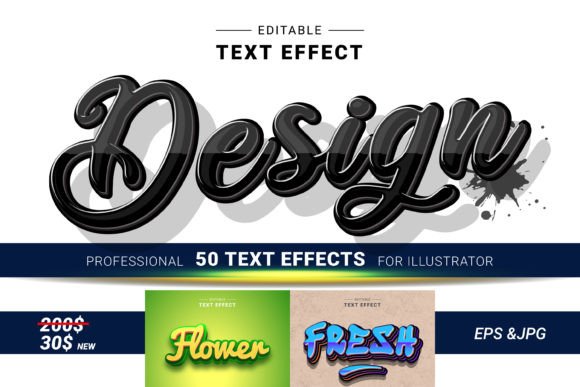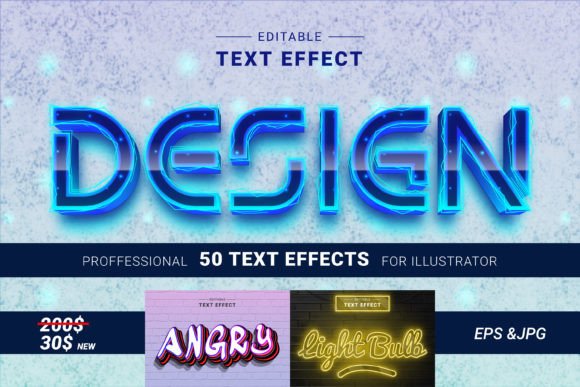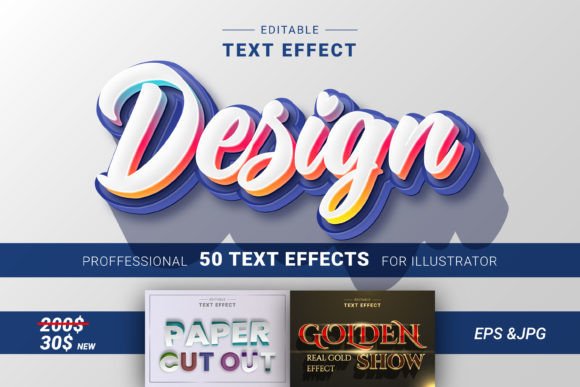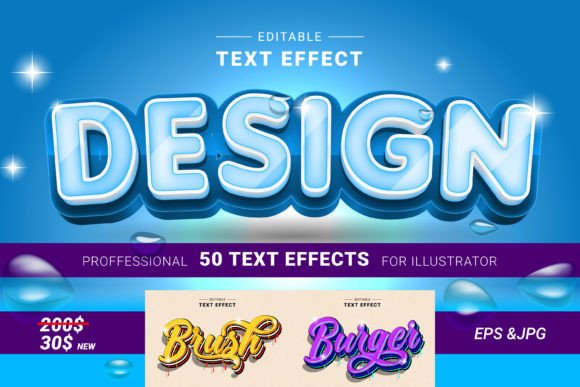
50 Editable 3D Text Effects Design N26: A Practical Evaluation for Modern Designers
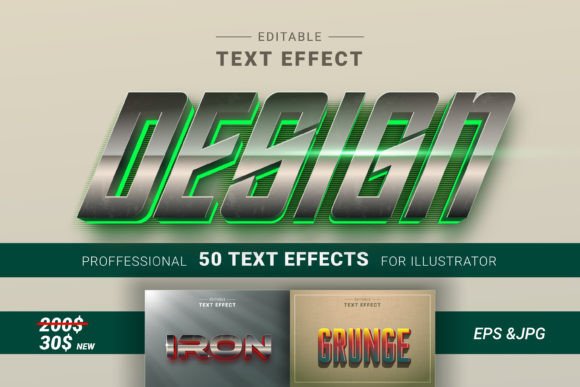
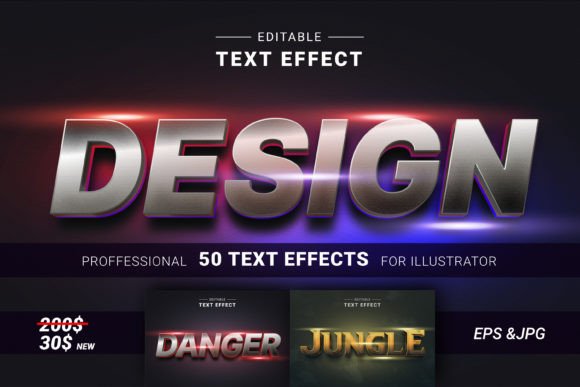
In the fast-paced world of digital design, typography is no longer just about legibility; it is a primary vehicle for visual identity. Whether you are crafting social media assets, designing event flyers, or developing web headers, the demand for depth and dimension in text has grown significantly. This is where specialized resources like 50 Editable 3D Text Effects Design N26 enter the workflow. Rather than building complex three-dimensional structures from scratch, this Illustrator add-on offers a curated library of pre-designed effects that aim to streamline the creative process.
For designers aged 20 to 50 who are constantly evaluating tools to improve efficiency without sacrificing quality, understanding the specific utility of this collection is essential. It is not merely a set of static images but a functional toolkit designed for customization. This article explores what makes Design N26 distinct, how it compares to manual creation methods, and when it serves as the optimal choice for your projects.
Understanding the Core Components of Design N26
At its foundation, 50 Editable 3D Text Effects Design N26 is an Adobe Illustrator-compatible resource pack. It includes 50 unique text effect templates, delivered in a format that prioritizes flexibility. The collection is housed in a main folder containing EPS files, JPEG previews, AI files, and a comprehensive help file. This structure is critical for professional workflows, as it ensures that users can preview options quickly via JPEGs before committing to editing the vector-based EPS or AI files.
The defining characteristic of this collection is its editability. Unlike raster-based text effects found in some stock photo libraries, these elements are vector-based. This means that every curve, shadow, and highlight can be adjusted. The color mode is set to vibrant RGB, which is specifically optimized for digital displays. This makes the collection particularly suitable for:
- Social Media Promotions: Creating eye-catching posts for Instagram, Facebook, or Twitter where bright, saturated colors perform well.
- Web Design: Developing hero sections, banners, or call-to-action buttons that require immediate visual impact.
- Digital Publications: Enhancing online magazines, eBooks, or digital flyers with dynamic typography.
The inclusion of an easy-to-understand help file further lowers the barrier to entry. For designers who may not be experts in advanced Illustrator techniques, this documentation simplifies the learning curve, ensuring a seamless creative journey from installation to final export.
Comparing Pre-Made Effects vs. Manual 3D Construction
When evaluating 50 Editable 3D Text Effects Design N26, it is helpful to compare it against the alternative: building 3D text manually in Adobe Illustrator or other 3D software. Both approaches have distinct tradeoffs regarding time, control, and consistency.
The Case for Manual Creation
Building 3D text from scratch offers unlimited freedom. You can control every extrusion depth, lighting angle, and texture map. However, this approach is time-intensive. Achieving a photorealistic or stylistically consistent 3D look requires a deep understanding of lighting, perspective, and layer management. For a single project, this might be acceptable. For agencies or freelancers managing multiple clients with tight deadlines, the return on investment for manual creation diminishes rapidly.
The Efficiency of Design N26
In contrast, 50 Editable 3D Text Effects Design N26 provides a "head start." The heavy lifting of establishing the 3D perspective and shading has already been done. The user’s role shifts from constructor to customizer. This is particularly advantageous when:
- Consistency is Key: If you need a series of graphics with a uniform style, starting with the same base template ensures visual cohesion across different pieces of content.
- Speed is Priority: When a client needs a concept draft within hours, using a pre-made effect allows you to present high-quality visuals almost immediately.
- Technical Limits Exist: Not all designers are proficient in complex 3D modeling. This tool bridges the gap between basic 2D design and advanced 3D aesthetics.
However, it is important to note that while editable, these templates are bound by their initial structural logic. If you require a highly unconventional perspective that deviates significantly from the template’s original design, you may find yourself spending more time modifying the template than building from scratch. Therefore, the best fit for Design N26 is projects that benefit from polished, standard 3D aesthetics rather than experimental, abstract forms.
Technical Considerations: RGB Color Mode and File Formats
A crucial decision factor in choosing any design asset is its technical specification. 50 Editable 3D Text Effects Design N26 utilizes the RGB color mode. This is a deliberate choice that aligns with its primary use cases: digital screens. RGB (Red, Green, Blue) offers a wider gamut of vibrant, luminous colors compared to CMYK (Cyan, Magenta, Yellow, Key/Black), which is used for print.
Why RGB Matters for This Collection:
The "vibrant" nature of the text effects mentioned in the product description relies on the backlighting capability of screens. Colors that pop on Instagram or a website may appear dull or shifted if converted improperly to CMYK for print. Therefore, this collection is ideally suited for:
- Digital advertising campaigns
- Online event promotions
- Web-based editorial content
If your primary goal is high-volume offset printing, such as large-scale billboards or magazine inserts, you must exercise caution. While you can convert RGB to CMYK, the resulting colors may lose some saturation. In such cases, you might need to adjust the color profiles manually or consider whether a CMYK-specific resource would be more appropriate. However, for modern hybrid workflows where digital presence is paramount, the RGB focus of Design N26 is a strength, not a limitation.
The inclusion of both AI and EPS files adds another layer of versatility. AI files are native to Adobe Illustrator, offering the smoothest editing experience. EPS files, being a universal vector format, ensure compatibility with other vector-editing software, although some advanced features may behave differently outside of Illustrator. This dual-format approach acknowledges the diverse software ecosystems used by professionals today.
Best-Fit Scenarios and Limitations
To make an informed decision, it is vital to identify where 50 Editable 3D Text Effects Design N26 excels and where it may fall short.
Ideal Use Cases
This collection is a strong candidate for designers who need to produce high-volume digital content. For example, a social media manager creating weekly promotional graphics for a brand can use these effects to maintain a premium look without hiring a 3D specialist. Similarly, web designers looking to add depth to landing pages without increasing load times (by using optimized vector exports) will find significant value here. The "infinite variations" promised by the editability feature allow for personalization, ensuring that the text does not look generic despite being template-based.
Potential Limitations
While versatile, this tool is not a substitute for dedicated 3D software like Blender or Cinema 4D. If your project requires realistic physics, complex animations, or interactive 3D elements for a website, a static Illustrator template will not suffice. Additionally, because the effects are pre-styled, there is a risk of overuse. If many designers utilize the same popular templates, your work may lack uniqueness unless you invest time in significant customization. The key to avoiding this is to treat the templates as a foundation, not a final product.
Making the Right Choice for Your Workflow
Choosing between building custom 3D text, hiring a specialist, or using a resource like 50 Editable 3D Text Effects Design N26 depends on your specific constraints: budget, time, and technical skill.
If you have ample time and a need for highly bespoke, non-standard 3D forms, manual creation or specialized software is the better path. However, for the majority of commercial design tasks—where the goal is clear communication, visual appeal, and timely delivery—this collection offers a balanced solution. It provides the professional polish of 3D design with the accessibility of 2D vector editing.
The inclusion of a help file and the organization of assets into a convenient main folder demonstrate an understanding of user experience. These small details reduce friction, allowing you to focus on creativity rather than troubleshooting file structures. For professionals seeking to enhance their portfolio with dynamic, eye-catching typography without a steep learning curve, Design N26 represents a practical, efficient resource.
Ultimately, the value of this tool lies in its ability to democratize 3D aesthetics. It allows designers to compete in a visually saturated market by providing access to high-quality effects that were once reserved for those with advanced technical skills. By evaluating your project’s needs against the capabilities of this collection, you can determine if it is the right addition to your design toolkit.