Visualizing the Future: The Strategic Power of a Modern Nuclear Power Plant Model in Design and Communication
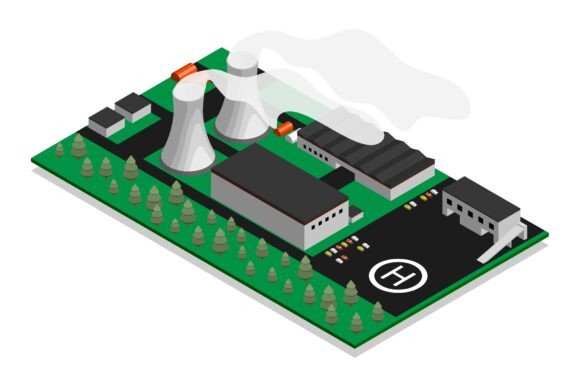
In an era where complex industrial infrastructure must be communicated with clarity and precision, the visual representation of energy systems has become a critical tool for professionals across multiple disciplines. At the forefront of this visual evolution is the Model of Modern Nuclear Power Plant, a strikingly modern interpretation that transcends traditional technical diagrams. This graphic ensemble is not merely an illustration; it is a meticulously crafted representation of the entire energy production, processing, and storage lifecycle. By embodying a dynamic isometric 3D vector design, the model retains crisp clarity when isolated on a white background, making it an indispensable asset for marketers, engineers, educators, and corporate strategists alike.
The Evolution of Industrial Visualization
The way we perceive and present heavy industry has undergone a significant transformation. Gone are the days of cluttered, two-dimensional schematics that required specialized knowledge to decipher. Today’s audience, ranging from potential investors to the general public, demands transparency and aesthetic appeal. The Model of Modern Nuclear Power Plant answers this call by capturing the architectural intricacy of the organization and the monolithic presence of cooling towers in a format that is both scientifically accurate and visually compelling.
This shift reflects a broader trend in business and technology: the democratization of complex information. Whether you are a freelancer creating content for a clean energy startup or a marketer developing a campaign for a utility company, the ability to simplify without oversimplifying is paramount. The isometric perspective offers a unique vantage point, allowing viewers to understand the spatial arrangement of energy storage that sprawls across the terrain while maintaining a sense of scale and proportion. This approach aligns with modern design principles that prioritize user experience and cognitive ease.
Architectural Intricacy and Functional Clarity
What sets this specific model apart is its attention to detail. It does not simply depict a building; it illustrates a functioning ecosystem. The graphic ensemble captures every stage of the energy lifecycle, from fuel processing to electricity generation and final storage. For professionals in the energy sector, this level of detail is crucial. It allows for more effective internal communication, training, and external reporting.
- Production: The reactor core and turbine halls are depicted with precise geometric accuracy, highlighting the technological sophistication involved in nuclear fission.
- Processing: Cooling systems and waste management facilities are integrated seamlessly into the design, emphasizing safety and efficiency.
- Storage: The spatial arrangement of energy storage units is clearly visible, showcasing the plant’s role in grid stability and renewable integration.
By isolating these elements on a clean white background, the design removes visual noise, allowing the viewer to focus on the structural relationships between different components. This clarity is essential for presentations, reports, and digital platforms where attention spans are short and information overload is a constant risk.
Meeting Changing Market Expectations
The relevance of the Model of Modern Nuclear Power Plant extends beyond aesthetics; it addresses changing market expectations. As the global community shifts towards sustainable energy solutions, nuclear power is experiencing a renaissance. However, this resurgence is accompanied by heightened scrutiny regarding safety, environmental impact, and operational transparency. Stakeholders—from policymakers to local communities—require clear, honest, and accessible information about how these facilities operate.
Visual tools like this isometric model bridge the gap between technical reality and public perception. They provide a neutral, factual representation that can be used to educate and inform. For entrepreneurs and creators in the clean tech space, leveraging such high-quality visuals can enhance credibility and trust. It signals a commitment to transparency and modernity, qualities that are increasingly valued in today’s market.
Practical Applications Across Industries
The versatility of this graphic form makes it suitable for a wide range of applications. Here are some practical examples of how professionals are utilizing this model:
- Corporate Communications: Energy companies use the model in annual reports and investor presentations to illustrate operational efficiency and future expansion plans.
- Educational Content: Universities and training institutions incorporate the isometric design into textbooks and online courses to teach students about nuclear engineering and energy systems.
- Marketing and Advertising: Agencies utilize the crisp, vector-based imagery in digital ads, brochures, and social media campaigns to promote clean energy initiatives.
- Urban Planning and Policy: Government bodies and consulting firms use the model to visualize the integration of nuclear plants into broader energy grids and urban landscapes.
Each of these use cases highlights the model’s ability to adapt to different contexts while maintaining its core message: nuclear energy is a complex, sophisticated, and vital component of the modern energy mix.
The Role of Isometric Design in Modern Storytelling
The choice of an isometric 3D vector design is not arbitrary. It is a strategic decision that enhances the storytelling potential of the image. Isometric projections eliminate perspective distortion, ensuring that all parts of the plant are equally visible and measurable. This uniformity is particularly important when discussing technical specifications or comparing different facilities.
Furthermore, the vector format ensures scalability. Whether displayed on a mobile device or a large conference screen, the image remains sharp and legible. This flexibility is crucial in a multi-platform digital environment where content must perform consistently across various devices and resolutions. For freelancers and designers, this means less time spent on formatting and more time focused on creative strategy.
The dynamic nature of the design also allows for animation and interactivity. In digital formats, different sections of the plant can be highlighted, labeled, or animated to show processes in motion. This interactive potential transforms a static image into an engaging educational tool, further enhancing its value for creators and educators.
Connecting to Larger Developments in Energy and Technology
The emergence of high-fidelity visual models like this one is part of a larger development in how we interact with technology. As industries become more digitized, the line between physical infrastructure and digital representation blurs. Digital twins, virtual reality simulations, and augmented reality experiences are becoming standard tools in engineering and maintenance. The Model of Modern Nuclear Power Plant serves as a foundational element in this digital ecosystem, providing the visual basis for more advanced simulations and analyses.
Moreover, this trend reflects a growing emphasis on sustainability and efficiency. By clearly illustrating the energy production and storage lifecycle, the model underscores the role of nuclear power in a low-carbon future. It highlights the integration of nuclear energy with renewable sources, showcasing how diverse energy systems can work together to create a stable and sustainable grid. This holistic view is essential for understanding the complexities of modern energy management.
Why Professionals Are Paying Attention
Professionals are paying attention to the Model of Modern Nuclear Power Plant because it solves a fundamental problem: how to communicate complexity with simplicity. In a world saturated with information, the ability to distill complex ideas into clear, visually appealing formats is a competitive advantage. Whether you are a marketer trying to differentiate your brand, an educator seeking to engage students, or an engineer explaining a project to non-technical stakeholders, this model provides a powerful tool for effective communication.
Additionally, the model’s modern aesthetic aligns with contemporary design trends that favor minimalism, clarity, and functionality. It avoids the clutter and confusion often associated with traditional industrial imagery, offering instead a clean, organized, and professional look. This alignment with current design preferences makes it more likely to resonate with modern audiences, who are accustomed to high-quality visual content in their daily lives.
Conclusion: Embracing Visual Clarity in a Complex World
The Model of Modern Nuclear Power Plant is more than just a graphic; it is a symbol of the modern approach to industrial communication. By combining architectural intricacy with dynamic isometric design, it offers a clear, comprehensive, and compelling view of nuclear energy infrastructure. For professionals, creators, and entrepreneurs, it represents an opportunity to enhance their communication strategies, build trust with their audiences, and contribute to a more informed public discourse on energy.
As we continue to navigate the challenges and opportunities of the energy transition, tools like this will play an increasingly important role. They allow us to visualize the future, understand the present, and make informed decisions about the path forward. By embracing visual clarity and modern design principles, we can better communicate the value of complex industrial systems and foster a deeper understanding of the technologies that power our world.
For those looking to elevate their content, streamline their workflows, or simply present their ideas with greater impact, the Model of Modern Nuclear Power Plant offers a perfect blend of form and function. It is a testament to the power of design to illuminate, inform, and inspire.