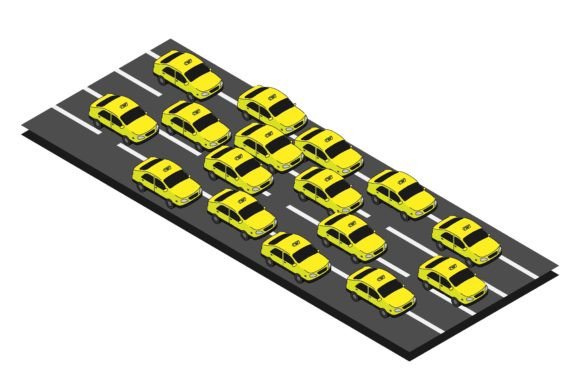
Isometric Passenger Taxi Cars Urban Traffic: Elevating City Design with 3D Visuals
In the fast-paced world of digital design, capturing the energy of a metropolis requires more than just static images; it demands perspective, depth, and movement. This is where Isometric Passenger Taxi Cars Urban Traffic graphics become an indispensable tool for creators. Whether you are developing a mobile game, designing an infographic about city logistics, or creating marketing materials for a ride-sharing app, the visual language you choose defines how your audience perceives the urban experience. By utilizing meticulously crafted isometric assets, designers can convey the bustling nature of city life from a unique, engaging bird’s-eye view.
The appeal of isometric design lies in its ability to simplify complex environments without losing detail. When applied to urban traffic scenarios, particularly those involving passenger taxis, this style transforms chaotic street scenes into organized, visually pleasing compositions. The high-angle perspective allows viewers to see the relationship between vehicles, roads, and infrastructure clearly, making it easier to understand traffic flow and city dynamics at a glance. For professionals seeking to enhance their creative projects with a playful yet professional 3D cartoon style, these vector graphics offer a perfect blend of aesthetic charm and functional clarity.
Understanding the Value of Isometric Urban Assets
Creating realistic urban scenes from scratch is a time-consuming process that often requires advanced 3D modeling skills and significant rendering resources. Many designers and developers face the challenge of balancing visual quality with production efficiency. This is where pre-designed Isometric Passenger Taxi Cars Urban Traffic sets provide a strategic advantage. These assets are not merely decorative; they are solution-oriented tools that address common pain points in urban-themed design projects.
One of the primary benefits of using isometric vectors is their scalability and adaptability. Because these graphics are intricately designed vectors isolated on a clean white backdrop, they can be resized without any loss of quality. This flexibility is crucial for multi-platform projects where an image might need to appear on a large billboard one day and a small mobile screen the next. Furthermore, the isolation of each element allows designers to mix and match components, creating custom scenes that fit specific narrative needs without having to redraw entire backgrounds.
The "bird’s eye view" offered by isometric projection also serves a cognitive function. It reduces visual clutter, allowing the viewer to focus on the essential elements of the scene—such as the taxi cars and their interaction with the environment. This clarity is particularly valuable in educational materials, user interface designs, and data visualization, where understanding spatial relationships is key to conveying information effectively.
Practical Applications for Designers and Developers
The versatility of Isometric Passenger Taxi Cars Urban Trafic graphics opens up a wide range of practical applications across various industries. Here are several ways professionals can leverage these assets to enhance their projects:
- Mobile Game Development: For indie developers and large studios alike, creating a vibrant cityscape for simulation or strategy games can be resource-intensive. Using pre-made isometric taxi and traffic assets allows teams to build detailed levels quickly, focusing their coding efforts on gameplay mechanics rather than asset creation. The playful 3D cartoon style appeals to a broad audience, making games feel approachable and fun.
- Urban Planning and Logistics Infographics: Companies involved in transportation, logistics, or urban planning often need to explain complex systems to stakeholders. Isometric illustrations simplify these concepts. By placing taxi cars within a structured grid, designers can visualize traffic patterns, pick-up zones, and route efficiencies in a way that is both informative and visually engaging.
- Ride-Sharing and Transportation Apps: User interface (UI) designers for ride-hailing platforms can use these graphics to create intuitive map interfaces or promotional materials. The distinct, eye-catching colors of the taxis help users instantly identify service vehicles, improving the overall user experience and brand recognition.
- Marketing and Advertising Campaigns: Brands looking to evoke an urban vibe can use these assets in social media posts, web banners, and print ads. The dynamic composition of traffic scenes suggests movement and activity, which can effectively communicate messages about speed, convenience, and city living.
Tailoring the Approach for Different Users
Different professionals will approach Isometric Passenger Taxi Cars Urban Trafic assets with varying goals and requirements. Understanding these differences can help users maximize the value of these graphics.
Graphic Designers often prioritize aesthetic consistency and ease of integration. For them, the fact that these vectors are doused in eye-catching colors and isolated on white backgrounds is a significant benefit. It allows for seamless compositing into existing layouts without extensive editing. Designers can easily adjust color palettes to match brand guidelines, ensuring that the taxis and traffic elements align with the overall visual identity of the project.
Game Developers, on the other hand, may focus on modularity and performance. They need assets that can be tiled or repeated to create larger maps without noticeable seams. The isometric perspective is ideal for this, as it provides a consistent angle that simplifies collision detection and pathfinding algorithms. Developers can use these taxi models as placeholders during prototyping or as final assets in casual games, saving valuable development time.
Educators and Content Creators might use these graphics to illustrate stories or explain concepts related to urban life. The playful, cartoonish style makes complex topics like traffic safety or public transportation systems more accessible to younger audiences or general readers. By using familiar elements like taxis and city streets, creators can build narratives that resonate with everyday experiences.
Implementation Tips for Best Results
To get the most out of your Isometric Passenger Taxi Cars Urban Trafic graphics, consider the following best practices:
- Maintain Consistent Lighting and Shadows: Even though these are stylized vectors, maintaining a consistent light source direction across all elements in your scene will enhance the 3D effect. Ensure that shadows cast by taxis and buildings align logically to create a cohesive look.
- Use Layering for Depth: Take advantage of the isometric perspective by layering elements. Place smaller objects in the foreground and larger structures in the background to create a sense of depth. This technique helps guide the viewer’s eye through the composition and adds realism to the cartoon style.
- Customize Colors for Context: While the default eye-catching colors are designed to grab attention, don’t hesitate to modify them to suit specific contexts. For example, you might change taxi colors to reflect different companies or use muted tones for background traffic to highlight main subjects.
- Combine with Complementary Assets: To create a truly bustling cityscape, combine taxi graphics with other isometric elements such as pedestrians, streetlights, and buildings. This creates a richer environment that tells a more complete story about urban life.
Conclusion
Incorporating Isometric Passenger Taxi Cars Urban Trafic into your design workflow is more than just an aesthetic choice; it is a strategic decision that enhances clarity, efficiency, and engagement. By offering a playful yet structured view of city hustle, these graphics allow creators to communicate complex urban dynamics in an accessible and visually appealing manner. Whether you are building a game, designing an app, or crafting an infographic, these meticulously crafted vectors provide the foundation for compelling visual storytelling.
As urban environments continue to evolve, so too does the need for effective visual communication tools. Embracing the isometric perspective allows designers to capture the essence of city life from a fresh angle, inviting audiences to explore the vibrant world of urban transportation. With the right implementation, these assets can transform ordinary projects into extraordinary experiences, bringing the excitement of the city directly to your users’ fingertips.