Integrating 3D Love Text Design PNG SVG into Your Creative Workflow
In the modern landscape of digital creation and physical product manufacturing, the efficiency of your asset library directly impacts your output quality. Whether you are a small business owner launching a Valentine’s Day collection, a freelance designer managing multiple client deadlines, or a hobbyist looking to elevate personal projects, the foundation of success lies in having reliable, high-quality resources. The 3D Love Text Design PNG SVG represents more than just a graphic element; it is a versatile tool designed to streamline the transition from concept to finished product. By understanding how to effectively integrate these file formats into your existing workflow, you can reduce preparation time, ensure consistency across different mediums, and achieve professional-grade results with minimal friction.
Understanding the Asset Package and File Compatibility
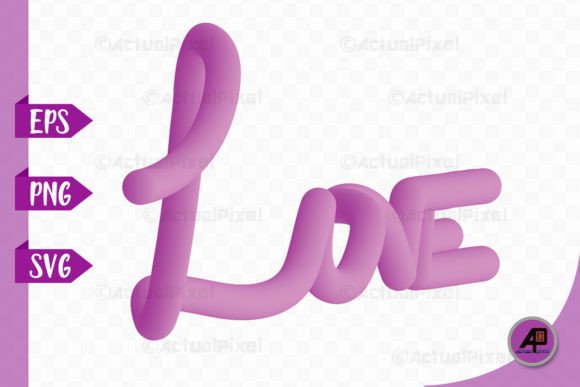
Before diving into the creative application, it is essential to understand the technical composition of the download. When you acquire this design package, you are not receiving a single static image but a suite of files tailored for different stages of the production process. Specifically, you will receive one EPS file, one PNG at 300 dpi, and one SVG file. Each format serves a distinct purpose in the lifecycle of a project, and knowing when to deploy each ensures optimal quality and compatibility.
The SVG (Scalable Vector Graphics) file is the cornerstone for users operating cutting machines such as Cricut or Silhouette. Because vectors are mathematically defined rather than pixel-based, they can be scaled infinitely without losing resolution. This makes the SVG ideal for resizing the 3D love text to fit various substrates, from small stickers to large tote bags, without any degradation in edge sharpness. For those using design software like Adobe Illustrator or CorelDRAW, the EPS (Encapsulated PostScript) file offers robust editing capabilities. It allows for deep customization of anchor points, color separation, and layer management, which is crucial for complex print jobs or when integrating the text into larger composite designs.
The PNG (Portable Network Graphics) file, provided at a high resolution of 300 dpi, serves a different function. It is a raster image with a transparent background, making it perfect for direct printing applications where vector editing is not required. This format is particularly useful for sublimation printing, web graphics, or quick mockups where speed is prioritized over editability. Understanding these distinctions allows you to plan your project timeline more effectively, selecting the right file before you even open your software.
Pre-Production: Preparation and Software Setup
Successful implementation begins with proper preparation. One common bottleneck for creators is file accessibility immediately after purchase. Note that you will likely need a computer to unzip the downloaded archive, as mobile devices often struggle with compressed file structures containing multiple formats. Once extracted, organizing these assets into a dedicated folder within your digital asset management system saves significant time during future projects. Consider tagging the folder with relevant keywords such as "Valentine," "3D Text," or "Cutting Files" to ensure quick retrieval.
Compatibility is another critical factor. Ensure that your design editing program supports SVG, EPS, and PNG formats. Industry-standard tools like Adobe Photoshop, Illustrator, Canva, Procreate, and specialized cutting software like Cricut Design Space or Silhouette Studio all interact differently with these files. For instance, while Canva handles PNGs seamlessly, importing SVGs may require a Pro subscription for full editing rights. Verifying your software’s capabilities beforehand prevents mid-project disruptions. Additionally, calibrate your monitor settings to get the most accurate representation of colors, keeping in mind that real colors may vary slightly due to screen settings and individual hardware differences.
Execution: Integrating the Design into Cutting and Printing Workflows
Once your environment is set up, the execution phase varies depending on your end goal. For those utilizing cutting machines, the SVG file is your primary asset. Import the SVG into your machine’s software and inspect the layers. The 3D effect in the text design often relies on layered shadows or highlights. You may need to ungroup elements to assign different vinyl colors or cardstock types to specific layers. This step is vital for achieving the depth implied by the "3D" aesthetic. Test cuts on scrap material are recommended to verify that the intricate details of the text render correctly, especially if you are working with heat-transfer vinyl (HTV) where weeding complexity can impact production time.
For print-on-demand or sublimation projects, the PNG file takes precedence. Its 300 dpi resolution ensures that the text remains crisp even when printed on larger surfaces like mugs or throw pillows. When preparing the file for print, check your color profile. While the digital file is optimized for standard screens, printing processes—especially sublimation—can shift colors. It is advisable to run a small test print to gauge how the colors translate to your specific material. Depending on how you choose to print out the picture, colors and quality may vary based on ink type, paper absorbency, and heat press settings. Adjusting brightness and contrast in your editing software before final printing can help mitigate these variances.
Practical Applications Across Multiple Mediums
The versatility of the 3D Love Text Design PNG SVG allows it to fit into a wide array of creative ventures. Here is how you can apply these assets across different product lines:
- Apparel and Textiles: Use the SVG for cutting HTV for t-shirts and hoodies. The layered 3D effect adds a premium look to casual wear, appealing to customers seeking unique Valentine’s Day gifts.
- Home Decor and Mugs: Leverage the high-resolution PNG for sublimating mugs, coasters, and ceramic tiles. The transparent background ensures clean edges without unwanted white boxes around the text.
- Paper Crafts and Cards: Both SVG and EPS files are excellent for creating layered paper cards. You can cut the shadow layer from darker cardstock and the main text from lighter stock to physically replicate the 3D illusion.
- Stickers and Labels: The vector nature of the SVG allows for precise contour cutting, making it ideal for producing durable, weather-resistant stickers for laptops, water bottles, or packaging seals.
- Digital Marketing Assets: Use the PNG for social media graphics, email headers, or website banners. The ready-to-use format speeds up content creation for seasonal promotions.
Quality Control and Long-Term Usability
Maintaining consistency across batches is crucial for professional credibility. Because digital files can behave differently across various outputs, establishing a quality control checklist is beneficial. Always verify that the SVG paths are closed and free of stray nodes before cutting. For prints, compare the final product against a calibrated reference image rather than relying solely on your screen. Documenting the settings that yield the best results—such as heat press temperature, time, and pressure for HTV, or ink density for printers—creates a standard operating procedure that ensures repeatability.
Furthermore, consider the long-term value of these assets. A well-designed 3D text element is not limited to a single season. While "Love" text is popular for Valentine’s Day, it can be repurposed for wedding invitations, anniversary gifts, or general romantic-themed collections year-round. By storing the editable EPS and SVG files securely, you retain the ability to modify colors or adjust scales for future campaigns without needing to source new designs. This adaptability enhances the return on investment for your digital purchases.
Final Thoughts on Streamlining Your Creative Process
Incorporating the 3D Love Text Design PNG SVG into your workflow is about more than just adding a graphic to a product; it is about optimizing the entire production chain. From the initial unzip and organization to the final quality check, each step benefits from a clear understanding of file types and their specific applications. By leveraging the scalability of SVGs, the editability of EPS files, and the convenience of high-resolution PNGs, you can tackle diverse projects with confidence and efficiency.
Remember that technology and materials evolve, so staying informed about software updates and new printing techniques will help you maximize the potential of these digital assets. Whether you are crafting a single personalized gift or managing a large inventory for an online store, the right preparation and execution strategies turn simple digital downloads into tangible, high-quality successes. Embrace the flexibility these files offer, and let them serve as a reliable foundation for your creative endeavors.